NAHCR26: Complete Guide for Healthcare Recruiters and Vendors
NAHCR26 is the single highest-density gathering of in-house healthcare recruiters in the United States. If you recruit nurses, allied health, or physicians for a hospital or health system, or you build tools for the people who do, this is the room you plan your year around. The conference brings working healthcare recruiters together for five days of education, peer time, the CHCR exam track, and a vendor floor that focuses tightly on healthcare recruitment. Most of the people in the room are the same people who will be opening 80 to 120 emails on Monday morning when they get home.
This guide is written for two audiences: working healthcare recruiters who want a clear, honest preview of the week, and recruiting tech vendors who want to know whether NAHCR26 is the right room for their team. It covers what NAHCR26 is, who attends, the 2026 theme, the workflow problems most attendees are trying to solve, travel and hotel logistics in Milwaukee, what the exhibit hall looks like, how recruiters think about AI and ATS fit, how NAHCR compares to ASHHRA and SHRM, a tactical playbook for the week, and how to follow up after the conference so it actually moves your funnel.
Contents
- TL;DR: key facts about NAHCR26
- What is NAHCR26?
- When and where is NAHCR26?
- Who attends NAHCR26?
- What are the key themes at NAHCR26?
- The CHCR credential, what it covers and why it matters
- Why NAHCR26 matters for healthcare recruiting in 2026
- How NAHCR26 compares to ASHHRA, SHRM, and AACN NTI
- Travel, hotels, and getting around Milwaukee
- A tactical playbook for the week (recruiters)
- A tactical playbook for the week (vendors)
- Recruiter FAQs about AI, ATS fit, and follow-up tooling
- Post-conference follow-up that actually works
- What we do not yet know about NAHCR26
TL;DR: key facts about NAHCR26
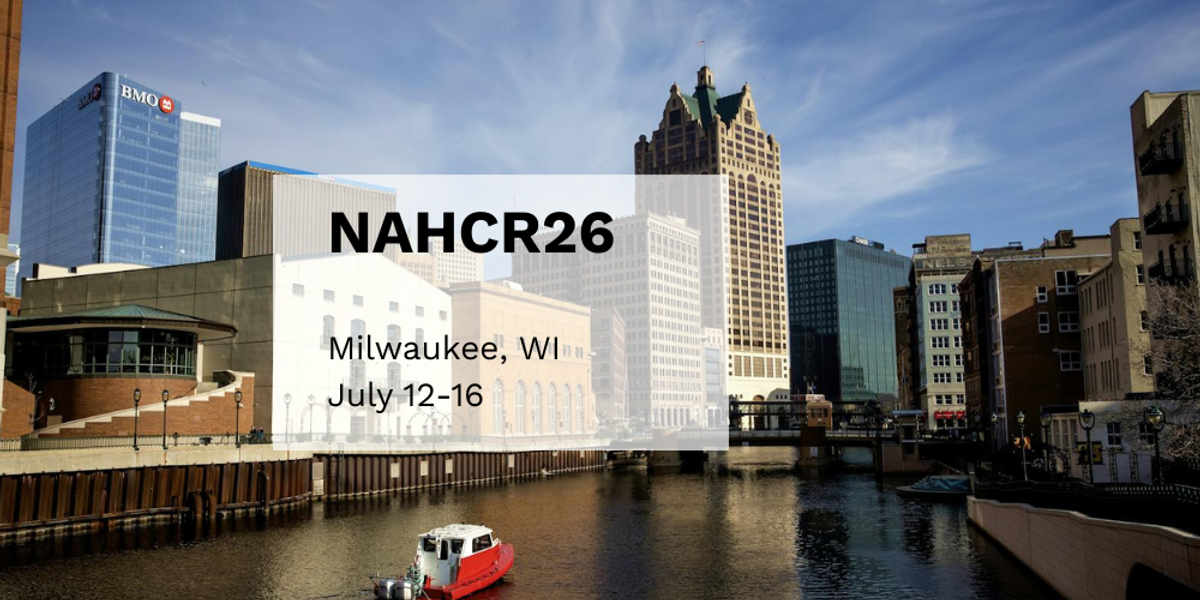
NAHCR26 runs July 12 to 16, 2026 at the Baird Center in downtown Milwaukee, Wisconsin. It is the 49th annual edition of the National Association for Health Care Recruitment's flagship conference. The 2026 theme is "Fresh Perspectives: Pouring New Life into Health Care Recruitment," a clear signal that the program will continue leaning into AI, automation, and recruiter productivity. Expected attendance is roughly 800 to 1,200 in-house healthcare recruiters, including hospital nurse recruiters, allied health recruiters, physician recruiters, and TA leaders, plus the vendor population on the exhibit floor. CHCR exam prep and the certification track run during the week, and CE credit is available throughout the program. Open registration runs through the NAHCR website with member pricing for active NAHCR members. Milwaukee is a small, walkable conference city, which means downtown hotel inventory near the Baird Center fills early. For recruiting vendors, NAHCR26 is the year's highest concentration of working in-house healthcare recruiters in one place, and the only US event where the in-house clinical recruiter is the primary persona on the floor.
What is NAHCR26?
The National Association for Health Care Recruitment, NAHCR, is the only US professional association built specifically for in-house healthcare recruiters. The annual NAHCR conference is its flagship annual event. It brings hospital nurse recruiters, allied health recruiters, physician recruiters, TA managers, and recruiting operations leaders together each year for continuing education, peer learning, the CHCR certification track, and a vendor exposition focused on healthcare recruitment.
NAHCR has run the annual conference for 49 years. Attendees come from every US state, representing hospitals and health systems of every size, from single critical access hospitals to integrated delivery networks with twenty or more sites. The exposition floor runs alongside the educational program, with healthcare ATS vendors, sourcing platforms, employer branding firms, video interview tools, and an increasing number of AI-enabled recruiting products exhibiting throughout the conference.
For anyone selling into or supporting the in-house healthcare recruiter, NAHCR26 is the most important conference of the year. The exhibit hall is intentionally smaller than ASHHRA or SHRM, which makes booth conversations more substantive. Buyers in the room are also daily users of the tools they are evaluating. That changes the quality of every conversation you have on the floor and turns NAHCR into the most useful exhibit dollar a healthcare recruiting vendor can spend.
When and where is NAHCR26?
NAHCR26 takes place July 12 to 16, 2026 at the Baird Center in Milwaukee, Wisconsin. The Baird Center is the city's main convention venue and recently completed a major expansion, adding meeting space and exhibit hall capacity. The compact downtown layout keeps hallway conversations and after-hours networking dense, which is part of what experienced NAHCR attendees value most.
Pre-conference workshops, including CHCR exam prep, are typically offered on the first day. The main educational program opens the following morning and runs through Thursday, with the exhibit hall open on the middle days. Check NAHCR's official site for the current schedule and final venue details. Milwaukee is a smaller, less expensive conference city than Chicago or Las Vegas, which is part of why NAHCR returned to it. Attendees consistently report that the compact venue makes the hallway track easier to use than at sprawling host cities. For hospital recruiters traveling on conference budgets that have not grown with inflation, Milwaukee in July is a manageable trip.
July weather in Milwaukee is mild by Midwest standards. Daytime highs typically run 75 to 82 degrees with relatively low humidity for a lake-adjacent city. Evenings cool into the mid-60s. Pack a light jacket for evening events along the riverfront and the Third Ward, and a layer for the convention floor, which runs cold by design.
Who attends NAHCR26?
What types of recruiters attend?
The NAHCR26 attendee base is primarily working in-house healthcare recruiters. The largest single group is hospital nurse recruiters, including ICU, ED, OR, med-surg, and specialty nursing. Allied health recruiters are next, including PT, OT, SLP, imaging, lab, respiratory, and pharmacy. Physician recruiters at health systems and physician groups attend in meaningful numbers. TA managers and recruiting operations leaders running clinical hiring at multi-hospital systems round out the senior portion of the attendee list. CHCR candidates and credentialed recruiters are well represented across the attendee base. The 2026 theme around new perspectives and AI tends to bring a slightly different mix than past years, including recruiters who have been quietly experimenting with ChatGPT, Gemini, or vendor pilots inside their hospital systems and want a place to compare notes.
Do allied health recruiters attend NAHCR?
Yes, and this is one of the parts of the audience NAHCR is unusually strong at serving. Allied health recruiters at hospitals and rehab networks attend NAHCR26 because most other healthcare recruiting events skew nurse-only. PT and OT recruiters, SLP recruiters, imaging recruiters, and lab and pharmacy recruiters are all in the room. The follow-up volume in allied health hiring is high, the candidate pools are thin, and the tooling support is years behind nursing. NAHCR26 is one of the few places allied health recruiters can get peer time and vendor-direct conversations in the same trip. For vendors who serve allied health hiring, that subgroup is the most underserved persona at the conference and often the most receptive to a real conversation about workflow.
Do agency and travel recruiters attend?
Yes, although NAHCR's center of gravity is in-house recruiting. Agency recruiters from the larger nurse and allied health staffing firms attend, particularly account leads who manage health system relationships. Travel and locum desks send recruiters who are increasingly responsible for both candidate-side outreach and account-side relationships. The agency presence is smaller than at SIA's Healthcare Staffing Summit, but more focused on the in-house buyer than at almost any other healthcare recruiting event. For agency vendors, NAHCR26 is the conference to meet the in-house recruiter your account managers have to work with for the next three years.
Are vendors and tech companies represented?
Healthcare recruiting tech vendors, ATS providers, sourcing platforms, employer branding firms, video interview tools, and an increasing number of AI-enabled products exhibit at NAHCR26. The exhibit hall is intentionally smaller than most HR tech events, which makes booth conversations more substantive. AI for healthcare recruiting moved from a curiosity in 2024 to a standing topic in 2025, and the 2026 theme suggests the program will lean further into it. Vendors evaluating whether to exhibit should keep in mind that NAHCR favors substance over scale. A small team that can have a real conversation about how a tool fits into the day of a working recruiter outperforms a large booth that talks past the buyer.
What does the typical attendee day look like?
The typical NAHCR26 attendee starts early. Breakfast and coffee in the host hotel or near the Baird Center, a keynote or pre-conference workshop in the morning, breakout sessions through midday, and exhibit hall time in the afternoon. Evenings usually mix a NAHCR-organized reception with smaller dinners hosted by sponsors and peer groups. The Wednesday and Thursday agenda tends to include the most popular leadership and AI sessions, which means Wednesday afternoon is often the busiest exhibit hall window of the week. Attendees who treat the trip as Sunday-evening to Thursday-afternoon tend to extract the most value, because they get one quiet evening to settle in before the schedule starts and one buffer evening at the end to debrief peers and finish badge follow-up.
What are the key themes at NAHCR26?
What recruiting and workforce topics are in focus?
NAHCR26 is structured primarily around continuing education for working healthcare recruiters. Sessions cover sourcing strategy, candidate experience, employer branding, recruiter operations, technology adoption, leadership development, and the workforce realities of clinical hiring in 2026. CE credit toward the CHCR credential is a meaningful draw, and the CHCR prep tracks at the conference are typically among the highest-attended sessions. Specific topics that recur in NAHCR programs include sourcing in tight allied health markets, candidate experience in nurse hiring, building a CHCR-credentialed team, and leadership tracks for new recruiting managers. Leadership tracks address recruiter manager development, building modern in-house recruiting teams, and navigating the intersection of TA with HR, finance, operations, and clinical leadership.
What AI and automation conversations happen at NAHCR?
Recruiter productivity and AI are everywhere on the agenda. The 2026 theme, "Fresh Perspectives: Pouring New Life into Health Care Recruitment," is a direct nod to where the room is on AI and automation. Generative AI in recruiter workflows, ambient AI inside email and phone, AI-driven sourcing platforms, and the candidate experience and compliance questions that come with all of them are on multiple tracks. Many TA leaders at NAHCR are weighing how to introduce AI into the recruiting function without alienating their recruiters or hurting their employer brand. That openness makes NAHCR different from most professional conferences. The questions on the floor are practical, not philosophical: which tools work, which break, what the candidates think when AI handles a reply, and what the IT team will say when an AI tool needs to read candidate data.
How is candidate experience showing up on the agenda?
Candidate experience, especially for nurses and allied health professionals, is no longer a soft topic at NAHCR. Recruiters bring real numbers: time-to-first-reply, screen-to-application ratios, no-show rates, and offer-acceptance rates. The conversation in 2026 has shifted away from generic "be human" advice and toward concrete operational fixes. How fast does the candidate get a real reply. How personal does that reply read. Does the scheduling link work on a phone in a hospital break room. Does the candidate hear from a different recruiter every time, or does one person stay with them through the funnel. NAHCR sessions tend to treat these as workflow problems, not branding problems, which is a useful frame for any vendor in the room.
What about retention and internal mobility?
Internal mobility is a growing track at NAHCR because health systems can no longer hire their way out of every gap. Program managers running internal pipelines, RN-to-NP bridges, and clinical-to-leadership tracks are increasingly part of the recruiter audience. The TA-to-internal-mobility conversation is also where ATS limitations show up most painfully, because the systems were built for external hiring and treat internal candidates as second-class records. Vendors with a clean answer to the internal mobility data problem find an unusually receptive audience at NAHCR.
The CHCR credential, what it covers and why it matters
The Certified Health Care Recruiter credential is one of the field's two main certifications and is administered by NAHCR. CHCR exam prep tracks run at the conference and are designed for working healthcare recruiters with at least one year of experience in the role. The exam covers sourcing, screening, candidate care, healthcare workforce regulation, recruiting operations, and ethics. Holding the CHCR is increasingly a hiring criterion at larger health systems, and the conference is the most efficient single window in the year to study, sit, and pass.
Recruiters who attend the prep track and sit the exam during the week typically arrive a day early, attend the prep workshops, sit the exam mid-week, and use the back half of the conference for sessions and peer time. Hospitals that fund the CHCR for their teams tend to see clear retention gains among recruiters who earn it, because the credential signals a real career path inside the function. For TA leaders, sponsoring a recruiter's CHCR is one of the most cost-effective recruiter retention plays available.
Why NAHCR26 matters for healthcare recruiting in 2026
The healthcare recruiter workflow in 2026 and where it breaks
A working healthcare recruiter in 2026 typically opens their morning with 80 to 120 emails, 15 to 25 new candidates from the ATS, 6 to 10 active reqs, and three or four hospital system stakeholders waiting on updates. The reqs themselves are split across critical care, med-surg, allied health, and specialty positions, often with very different sourcing strategies for each. Time to first contact is the single best predictor of whether a candidate ends up scheduling a screen, and on most teams the reality is that candidates who do not get a personalized reply within 24 hours quietly disappear. The follow-up gap is where good candidates fall through. Recruiters know this. Most have tried sequence tools, ATS-native nurturing, and template libraries.
The problem with bolted-on tooling is that it lives outside the recruiter's actual workflow. The recruiter still has to switch tabs, copy candidate context, decide which template to send, and personalize it. By the time that lift is done, the recruiter is back to their inbox and the next 30 emails. Healthcare recruiter automation built on top of legacy ATS layers tends to produce robotic, unsigned, low-trust messages that hurt the brand more than they help the funnel. What recruiters actually want is for the boring parts of follow-up to disappear. They want first replies drafted in their voice, screens booked on their calendar, no-shows rebooked, status updates pushed to hiring managers, and candidate context surfaced before they jump on a call. They want all of that to happen in the inbox they already work in. That is exactly the conversation that defines NAHCR26.
Why is NAHCR26 the right room for recruiting vendors?
In-house healthcare recruiters are notoriously difficult to reach with cold outreach. Their inboxes are full, their calendars are slammed with hiring manager intakes and candidate screens, and most are skeptical of vendor pitches by default. NAHCR26 temporarily shifts that dynamic. Attendees come specifically to learn, to evaluate vendors, and to talk with peers about what is working. A vendor with a real presence at NAHCR, on the floor, in sessions, or in evening conversations, starts those relationships with much more credibility than any outbound campaign can produce. NAHCR26 is the only US conference where the entire room is the in-house healthcare recruiter. ASHHRA is HR leadership. SHRM is general HR. AACN NTI is critical care nursing. NAHCR26 is recruiters, and recruiters are who Ambient Recruiter is built for.
What makes the conference economics work for a small system?
For a single hospital or a small system, NAHCR can feel expensive on paper. Registration plus travel plus three nights at a downtown Milwaukee hotel adds up quickly. The math works because the alternative is a year of trial and error inside the hospital, evaluating vendors by demo deck and case study. Five days at NAHCR puts a recruiter in a room with peers who are running the same evaluations. The peer-to-peer signal on what actually works inside a hospital is hard to get any other way, and it compounds. A recruiter who avoids one bad ATS migration or one mis-scoped sourcing pilot in the year after NAHCR has paid the trip back many times over.
How NAHCR26 compares to ASHHRA, SHRM, and AACN NTI
NAHCR vs ASHHRA
ASHHRA is the American Society for Healthcare Human Resources Administration. It draws CHROs, VPs of HR, and senior HR leaders at hospitals and health systems. NAHCR draws working in-house recruiters and TA managers. The buyer profiles are different, and the conversations on the floor are different. ASHHRA leaders tend to ask about strategy, total rewards, compliance posture, and enterprise contracts. NAHCR recruiters tend to ask about workflow, time savings, ATS fit, and what the candidate sees on the receiving end. Vendors who sell to both audiences usually exhibit at both, with different talk tracks and different demo flows. If you have to pick one for a small team's first year of conferences, NAHCR is the better single bet for any product whose primary user is the recruiter.
NAHCR vs SHRM Annual
SHRM Annual is the largest HR conference in the country. It draws roughly 20,000 HR professionals from every industry. The healthcare slice is real but not dominant, and the recruiter cohort inside that slice is smaller still. NAHCR is purpose-built for the healthcare recruiter and is roughly five percent of SHRM's size, which means the signal-to-noise is dramatically better for any tool aimed at clinical hiring. SHRM is the right room for general HR positioning and brand. NAHCR is the right room for actual healthcare recruiter buying conversations.
NAHCR vs AACN NTI
AACN NTI is the National Teaching Institute, the flagship event for critical care nurses. It is a clinical conference, not a recruiting conference. The ICU and CCRN audience there is enormous and includes many candidates rather than buyers. Recruiters who attend AACN NTI go to source, run open houses, and talk to working nurses about what they want from an employer. NAHCR is the inverse. The recruiters are the audience. For vendors, AACN NTI is a candidate-side play; NAHCR is a buyer-side play.
NAHCR vs SIA Healthcare Staffing Summit
SIA's Healthcare Staffing Summit draws agency, travel, locum, and per-diem staffing firms. The buyer profile is staffing-firm leadership, not in-house recruiters. NAHCR is in-house recruiters at hospitals and health systems. There is some overlap on the agency side, but the two events serve different sides of the market. For vendors who sell into both staffing firms and health systems, both events are worth a serious look. For vendors who sell only to in-house teams, NAHCR is the priority.
Travel, hotels, and getting around Milwaukee
Where is NAHCR26 being held?
NAHCR26 takes place at the Baird Center, the main convention venue in downtown Milwaukee. The Baird Center recently completed a significant expansion and now offers more meeting space and exhibit hall capacity. It is walkable to the riverfront, the Third Ward, and most major downtown hotels. Confirm the official venue and floor plan on NAHCR's site as the program nears.
What hotels are near NAHCR26?
NAHCR typically negotiates a discounted block at the conference's host hotel, with overflow blocks at nearby downtown properties. Hotels within walking distance of the Baird Center include the Hilton Milwaukee City Center, the Hyatt Regency Milwaukee, the Pfister Hotel, the Saint Kate, and the Marriott Milwaukee Downtown. Milwaukee is small and walkable, so most attendees who stay downtown can reach the venue easily. Inventory tightens as the conference approaches, so book before late spring if you want a walkable property. Confirm the conference room block through NAHCR's official site before booking. The Pfister and the Saint Kate run higher; the Hilton Milwaukee City Center and the Marriott Milwaukee Downtown tend to anchor the official block. If your team is sharing a residence-style space, downtown also has a handful of all-suite properties suitable for a longer stay.
How do attendees get to NAHCR26?
Milwaukee Mitchell International Airport, MKE, is roughly 15 minutes from downtown Milwaukee by ride share. Most out-of-town attendees fly into MKE. Chicago O'Hare, ORD, is an alternative for travelers who cannot find a direct flight to MKE. The drive from Chicago is roughly 90 minutes, and Amtrak's Hiawatha line runs between Chicago and Milwaukee multiple times a day. Once on the ground in Milwaukee, rideshare and taxis cover most attendee needs, and the downtown core is walkable. For attendees coming from the West Coast, MKE has direct flights to Denver, Phoenix, Los Angeles, and Seattle, with United, American, Delta, and Southwest all serving the airport. For attendees from the East Coast, Boston, New York, Washington DC, Atlanta, and Charlotte all have direct service.
What is there to do in Milwaukee outside the conference?
Milwaukee is a smaller city than Chicago, and that is part of its appeal as a conference host. The downtown core is walkable. The riverfront and the Third Ward are full of restaurants, bars, and small museums that work well for evening team dinners or after-hours conversations with peers and vendors. The Milwaukee Art Museum, the Harley-Davidson Museum, and the Public Market are all within walking distance of the Baird Center. For attendees who want a longer break, Lake Michigan and the Brewers ballpark are a short ride from downtown. Most NAHCR attendees treat the conference as a Sunday-to-Thursday trip and use the back half of the week to fold in one or two evenings of city time.
What about food and dinners?
Milwaukee's restaurant density downtown is strong for a city its size. The Third Ward neighborhood is the easiest single area to plan a team dinner: it is six minutes on foot from most host hotels, the restaurant range covers casual to formal, and reservations are usually available with a few days notice. Sponsor dinners typically book the upstairs rooms at well-known Third Ward and downtown spots. For a smaller dinner with a peer, the Public Market on Wednesday evenings is a low-friction option. For a recruiter on a tight per-diem, the bratwurst and beer route through downtown remains a reliable budget plan.
A tactical playbook for the week (recruiters)
Before the conference
Block calendar holds for any pre-scheduled vendor meetings before the rest of your week fills. Tell hiring managers you will be slow on email Tuesday through Thursday, and set an out-of-office that points urgent items to a teammate. Pull a short list of three to five vendors you want to evaluate seriously and send them a note ahead of time. The vendors with their act together will reply within a day with a calendar slot. The ones who do not are usually the ones who will not reply when you actually need them as a customer either.
If you are sitting the CHCR exam, register early, download the prep materials, and block the night before for review. If you are taking peers to dinner, book those reservations from the airport on the way in. Downtown Milwaukee is small enough that walk-ins work, but for a group of six you want a held table.
During the week
Treat the exhibit hall like a real evaluation, not a swag run. Walk the floor once on the first morning to scan booths, then come back later in the day with a list of three to five real conversations to have. The booth conversation that matters is the one where you can show the vendor an actual req or a real candidate situation and watch them work through it. If a vendor will only show you a demo deck, that is a signal to move on.
Take notes during sessions in a single document, not on paper. You will not transcribe paper notes back at the office. Photograph the contact list at any peer-roundtable session and message anyone you connected with on LinkedIn before the conference ends. The hallway conversations are usually more useful than the keynotes. Plan accordingly.
After the conference
Block ninety minutes on Friday or Monday for a single follow-up sprint. Send the personalized notes to vendors, peers, and candidates you met. Ninety minutes done well moves more pipeline than a slow drip over three weeks. If you have a tool that drafts the notes for you in your voice, this is the week to use it. Otherwise, write the first one well and make the rest variations of it.
A tactical playbook for the week (vendors)
Booth basics
A small, focused booth with one or two senior people who can have a real conversation outperforms a large booth with a junior team. Recruiters at NAHCR can spot a junior SDR in five seconds and they will route around your booth for the rest of the week. If you are exhibiting, send the people who can actually answer workflow questions, ideally including someone who has worked as a recruiter. The cost difference between sending two senior people and four junior people for the same dollar amount is almost always worth it.
What to demo
The strongest booth demo at NAHCR is one that handles a real recruiter scenario. Ask the visitor for a recent inbound candidate they remember, then walk through what your tool would have done with that candidate. If your product cannot survive that conversation, fix the product before you exhibit. Recruiters at NAHCR are kind, but they are also pattern-matching against four other vendors who told them the same generic story before lunch.
Sponsor dinners and evening events
Sponsor dinners are the highest-leverage time of the week. A six-to-eight person dinner with the right recruiter mix is usually worth more than two days of booth conversations. Plan dinners early, invite recruiters you have already had a real exchange with on the floor, and let the conversation be about their work rather than your product. The follow-up after the dinner is what converts.
After the conference
Run a tight 48-hour follow-up sprint. The second day after the conference is the highest-conversion window of the year for a healthcare recruiting vendor. Personal notes from the actual people who had the conversations, not from a marketing automation tool, dramatically outperform any sequence. If your team uses ambient inbox tooling, this is the week the investment pays back.
Recruiter FAQs about AI, ATS fit, and follow-up tooling
Will Ambient Recruiter integrate with my ATS, including Workday, iCIMS, Bullhorn, Avionté, and SmartRecruiters?
Yes. Ambient is designed to operate alongside the ATS, not replace it. We have native integration support for Workday, iCIMS, Bullhorn, Avionté, SmartRecruiters, Greenhouse, and the major healthcare-heavy systems, and API-based integration for systems with open endpoints. Where a system does not have a clean API, Ambient still operates because it lives in Gmail rather than inside the ATS. Candidate context, status updates, and notes flow back to the ATS through whichever path the customer prefers. Recruiters do not change how they work in the ATS itself, which keeps adoption friction near zero and keeps your existing reporting clean.
Will candidates know an AI is writing the messages?
Every email Ambient sends comes from the recruiter's real Gmail account, signed by the recruiter, on the recruiter's domain. Drafts are written in the recruiter's voice, calibrated from past sent mail, and the recruiter retains full control to edit before send or pause Ambient on any req. From a candidate's perspective, the experience is a recruiter who is suddenly more responsive, not an AI assistant. Healthcare recruiters who care about candidate experience consistently report that response quality goes up, not down, when Ambient is running, because the recruiter has more time for the conversations that actually matter.
How does this affect email deliverability, SPF, DKIM, and DMARC?
Ambient sends from the recruiter's existing Google Workspace account, which means existing SPF, DKIM, and DMARC settings continue to apply unchanged. There is no new sending domain, no shared IP pool, no third-party email service to configure. Deliverability stays inside the same envelope your team already uses for one-to-one mail. Most customers see deliverability hold steady or improve slightly because Ambient drafts higher-quality, more personalized messages than the template-driven sequences it tends to replace.
Is Ambient HIPAA-compliant, SOC 2 certified, and willing to sign a BAA?
Ambient Recruiter is built to be HIPAA-aligned and supports a Business Associate Agreement for healthcare customers. Candidate communication stays inside the recruiter's own Google Workspace tenant, which keeps the compliance story simple and reduces the surface area your privacy team has to evaluate. SOC 2 Type II controls are part of the standard deployment. We are happy to walk through the architecture with your IT and privacy teams as part of evaluation, including data flow diagrams, retention controls, and audit log access.
Can I pilot Ambient on a single recruiter or one role family before rolling it out across the team?
Yes. Most NAHCR-aligned customers start with a 30-day pilot on a single recruiter or a small team, typically focused on one role family such as ICU nursing, allied health, or NPs. Pilots are scoped to produce a clear before-and-after picture in 30 days, including weekly hours saved, response times, and screen-to-application ratios. Annual contracts are not required to evaluate. We would rather have you confirm the value in your own inbox.
How many hours per recruiter per week does Ambient typically save?
In current customer pilots, healthcare recruiters typically recover six to ten hours per week once Ambient is fully running on their reqs. The lift comes from drafted replies, automated scheduling, and the elimination of routine status updates. The hours show up first in the recruiter's calendar as time to actually call candidates and meet hiring managers, which is where the downstream funnel improvements then come from. We share specific anonymized pilot numbers in person at NAHCR26.
Does Ambient work for allied health, including PT, OT, SLP, imaging, and lab roles?
Yes. Allied health is one of the strongest use cases. PT, OT, SLP, imaging, lab, respiratory, and pharmacy reqs all live in long, slow funnels where time-to-first-reply is the difference between a screen and a candidate ghost. Ambient drafts personalized first contact and inbound replies inside the recruiter's Gmail, on their schedule, in their voice. For allied health teams running lean, often one or two recruiters across multiple hospitals, the productivity lift tends to be larger than for nurse-only teams. The conversation at NAHCR26 about allied health staffing is exactly the conversation Ambient is built for.
Can recruiters review and approve every message before it goes out, or does Ambient send autonomously?
Both modes are supported and can be set per recruiter or per req. Most customers start with full review-and-approve for the first two weeks while their team builds trust with the drafts, then move higher-volume, lower-risk threads to auto-send while keeping first-touch and offer-stage messages in review. Granular controls let you decide which reqs Ambient covers and which it does not, and recruiters can pause Ambient on any thread at any time. Audit logs record every message sent, every edit made, and every pause or resume.
How does Ambient handle TCPA compliance for SMS or phone outreach to candidates?
Ambient's email behavior runs inside the recruiter's existing Gmail with no new sending infrastructure, which keeps email out of TCPA scope. Where SMS or voice is in play, Ambient supports configurable opt-in collection, candidate-initiated SMS, quiet hours, and full opt-out tracking. Recruiters retain control over which channels Ambient is allowed to use for which candidates. Compliance posture is tightened at the workspace level so that a single recruiter cannot quietly turn on a channel that the rest of the team is not approved to use.
What happens to candidate data on offboarding or contract end?
Candidate communication lives inside your Google Workspace tenant, not inside Ambient's infrastructure, which means the data your team owns stays with your team after the contract ends. Ambient retains operational metadata, such as which reqs were covered and which messages were drafted, for the duration of the contract and the agreed retention window after offboarding. Specific retention windows are configurable as part of the BAA and contract.
How long does it take to get a recruiter live on Ambient?
Most healthcare recruiters are sending Ambient-drafted messages from their own Gmail within the first business day. The first 30 minutes cover Google Workspace authorization, voice calibration from prior sent mail, and a walkthrough of pause and approval controls. ATS integration and hiring manager update flows usually take an additional half day to configure for the first recruiter on a team and roll forward to additional recruiters in minutes once the first integration is in place.
How is Ambient different from the AI features built into our existing ATS?
ATS-native AI features tend to live inside the ATS interface and require recruiters to leave the inbox to use them. Ambient is the inverse. It lives inside the recruiter's existing Gmail and phone, where the actual conversation already happens, and it drafts messages in the recruiter's voice, signed by the recruiter, on the recruiter's domain. Most healthcare recruiters spend most of their day in the inbox, not in the ATS. ATS AI helps the systems team. Ambient helps the recruiter.
Post-conference follow-up that actually works
The follow-up problem after NAHCR26 is identical to the follow-up problem inside the day job. A recruiter walks back to their hotel with two stacks of badges, a list of candidates from a hospital open house, and a vendor list to evaluate. Most of those stacks never get worked. The same is true for vendors who collect badge scans on the floor and never run a clean follow-up sequence. The conferences where attendees get value are the ones where someone sends a personalized, in-context reply within 48 hours.
The 48-hour window matters because it is the last window where the conversation is fresh on both sides. By the time a week has passed, the recruiter is back in the firehose, the vendor is in their next conference, and the badge has gone from a useful memory to an unnamed email address. A note that lands inside that 48-hour window with a real reference to the conversation and a clear, low-pressure next step converts at multiples of any drip sequence.
The most effective post-conference outreach is fast, personal, and comes from a real email address the recipient recognizes. Healthcare recruiters receive a high volume of vendor messages and recognize automated sequences immediately. A personalized note that references the specific conversation at the conference, sent from the actual person they met, within 48 hours, dramatically outperforms any templated sequence. That is exactly what Ambient Recruiter does for our customers, and we will be running the same play after NAHCR26.
What we do not yet know about NAHCR26
Has the full agenda been published?
The complete session schedule and speaker lineup are typically released in stages in the months leading up to the conference. Check NAHCR's official site for the most current program updates, including pre-conference workshops, keynote speakers, and breakout tracks. We will update this page as the 2026 program is finalized.
Are exhibitor and sponsorship packages confirmed?
Exhibitor registration typically opens well in advance of the conference. Current availability, sponsorship tiers, and pricing can be found through NAHCR's exhibitor portal as the program nears. If you are evaluating sponsorship and want a recruiter-side perspective on which packages tend to convert, we are happy to share what we have learned at peer conferences.
Where is Ambient Recruiter at NAHCR26?
We will be at NAHCR26 in Milwaukee. The single best way to evaluate Ambient Recruiter is a 15-minute coffee during the conference, ideally with one or two real reqs from your queue in front of us. We will not pitch a deck. We will show what an inbound candidate reply looks like when Ambient handles it from the recruiter's actual Gmail. If your schedule is tight in Milwaukee, we are happy to run the same demo over Google Meet the week after.