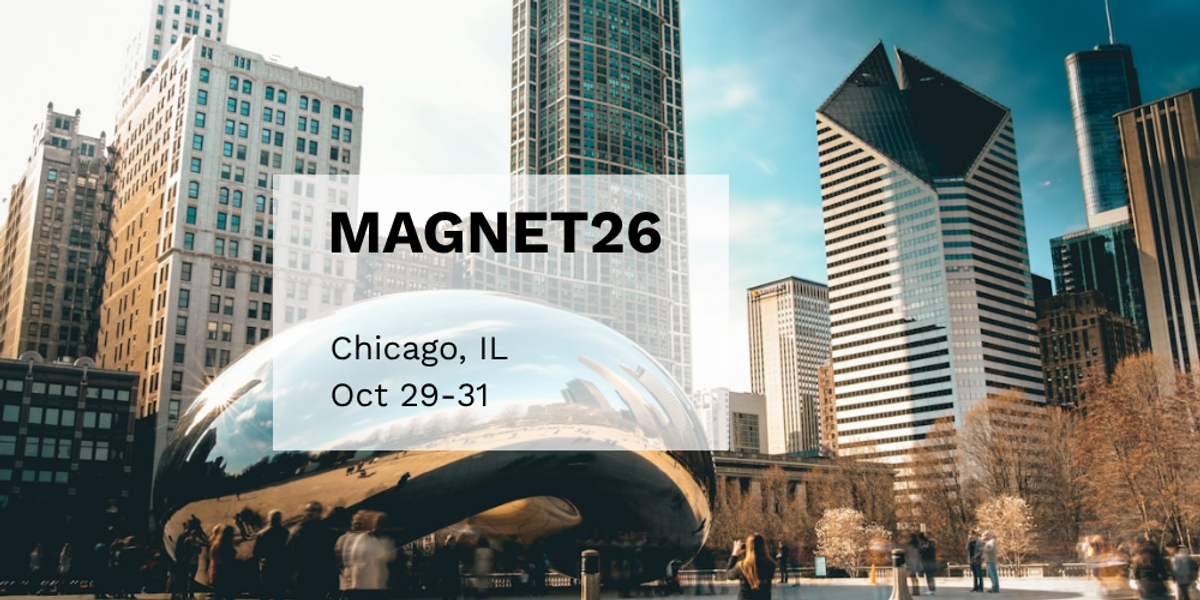
The ANCC National Magnet Conference returns to McCormick Place in Chicago October 29 to 31, 2026, this time co-hosted with the ANCC Pathway to Excellence Conference. More than 9,000 nurses, nurse executives, Magnet Program Directors, and nursing leaders from 20+ countries are expected to attend, making it the largest annual gathering of professional nursing leadership in the world. Roughly 60 percent of attendees come from Magnet-designated organizations, and the rest are split between health systems on the Magnet journey, Pathway-designated facilities, and academic and policy organizations that follow nursing excellence.
For nurse executives, the conference is the year's most concentrated source of best-practice content, peer benchmarking, and professional development. For nurse recruiters and TA leaders, it is the single largest in-person gathering of CNO and CNO-direct decision makers in healthcare, which makes it a high-leverage event for relationship building, recruiting senior nursing leaders, and meeting potential employers. For vendors selling into nursing leadership (technology, education, staffing, recognition, scheduling, professional development), Magnet is one of the most important shows on the calendar.
This guide is for the senior nurse leaders, Magnet Program Directors, in-house nurse recruiters, vendors, and first-time attendees planning their 2026 trip. We cover what ANCC and Magnet are, why the program matters, what to expect at the 2026 conference, who attends, what the agenda typically looks like, how to make the most of the exhibit hall, where to stay in Chicago, travel logistics, evening events, and frequently asked questions. If you are reading this in advance of registering, the short version is: register early, book the hotel block as soon as it opens, plan your sessions before you arrive, and treat the three days as a working trip.
What is the ANCC Magnet Recognition Program and why does this conference matter
The American Nurses Credentialing Center (ANCC) is a subsidiary of the American Nurses Association (ANA) and is the largest and most prominent nursing credentialing organization in the world. ANCC certifies individual nurses across specialties and runs the Magnet Recognition Program, the Pathway to Excellence Program, and several other professional development credentials. The Magnet Recognition Program is the most prestigious recognition for nursing excellence at the organizational level, awarded to hospitals and health systems that demonstrate exceptional nursing practice, transformational leadership, structural empowerment, exemplary professional practice, and new knowledge and innovation. Roughly 600 healthcare organizations worldwide hold Magnet designation, representing fewer than 10 percent of U.S. hospitals.
Magnet designation is not just a plaque on the wall. It correlates with better patient outcomes (lower mortality, lower failure-to-rescue, lower pressure injury rates), better nurse outcomes (lower turnover, higher engagement, higher rates of professional certification and BSN attainment), and stronger recruiting (Magnet hospitals consistently rate higher in nurse preference surveys). Achieving and maintaining Magnet status is expensive in time, money, and leadership attention, which is why it functions as a credible signal of organizational commitment to nursing.
The Magnet Conference is the official annual conference of the Magnet Recognition Program. It serves three purposes simultaneously. It is a celebration of accomplishment for newly designated Magnet organizations. It is a showcase of best nursing practices for the Magnet community. And it is a development opportunity for organizations on the Magnet journey or holding Pathway to Excellence designation. Attendees go home with concrete examples, contacts at peer organizations, and renewed commitment to advancing nursing practice at their home institutions.
The Pathway to Excellence Program, co-hosted with Magnet at the 2026 conference, is a sister designation focused on positive practice environments. Where Magnet emphasizes nursing excellence at the organizational level, Pathway emphasizes the day-to-day practice environment that nurses experience. Many organizations use Pathway as a step toward Magnet. Others maintain Pathway as a long-term designation. Combining the two conferences in 2026 reflects ANCC's strategy to connect the broader community of organizations committed to nursing excellence.
If you are planning to attend, understanding which of these programs your organization is pursuing or recognizing will help you choose sessions. The agenda includes content for Magnet pursuers, current Magnet holders, redesignation candidates, Pathway pursuers, and Pathway holders. The tracks overlap but the specific sessions you choose will depend on where your organization is on its journey.
Dates, venue, and what to expect on site
The 2026 conference runs October 29 to 31, 2026 (Thursday through Saturday) at McCormick Place in Chicago. McCormick Place is the largest convention center in North America and one of the largest in the world, with several halls connected by indoor walkways. Most conference activities are in the West Building or South Building depending on track and session, with the exhibit hall typically in the South Building. Registration, plenary sessions, and breakouts span both buildings. Plan to walk. A lot. Comfortable shoes are not optional.
The conference typically opens with a welcome reception on Wednesday evening (October 28 in 2026) for early arrivals, followed by the official kickoff with an opening keynote on Thursday morning. Each day includes plenary sessions, multiple breakout tracks, networking lunches, exhibit hall hours, and evening events. The Magnet Recognition ceremony, recognizing newly designated and redesignated Magnet hospitals, is typically one of the highlights and is heavily attended.
Practical site logistics:
- Registration generally opens at 6:30 or 7:00 AM each conference day to accommodate the volume.
- Sessions run from approximately 8:00 AM to 5:00 PM, with evening events stretching into the night.
- Wi-Fi is provided in conference areas but bandwidth can be uneven with 9,000+ attendees. Download what you need offline.
- Food and beverage during sessions are typically light. Bring snacks if you have specific dietary needs.
- Coat check is available; Chicago in late October is unpredictable (anything from sunny 60s to cold rain).
- Public transit (Metra Electric and CTA Green Line) connects McCormick Place to downtown Chicago. Buses and taxis are also widely available.
Registration in 2026 has multiple price tiers based on ANA membership status, group size, and timing. Early-bird registration typically runs about $1,000 to $1,400 for ANA members and $1,400 to $1,800 for non-members. Group rates and member discounts are meaningful. Single-day passes are sometimes available but most attendees come for all three days. Pathway-only registration is available at a separate rate. Check magnetpathwaycon.nursingworld.org for current pricing.
Who attends ANCC Magnet 2026
The audience is heavily skewed toward senior nursing leadership and Magnet program staff. Typical attendee composition:
- CNOs and Chief Nursing Officers: roughly 20 percent of attendees.
- Magnet Program Directors and Magnet Coordinators: roughly 25 percent.
- Nurse managers, directors, and assistant directors of nursing: roughly 20 percent.
- Nurse educators, clinical educators, and nursing professional development specialists: roughly 15 percent.
- Charge nurses and unit-level leaders: roughly 10 percent.
- Nursing informatics, research, and quality leaders: roughly 5 percent.
- Vendors, exhibitors, and consultants: roughly 5 percent.
About 60 percent of attendees come from Magnet-designated organizations. The other 40 percent come from hospitals on the Magnet journey, Pathway holders, academic centers, healthcare policy organizations, professional associations, and international attendees representing nursing organizations in 20+ countries. The international presence is meaningful and gives the conference a global character that is unusual among U.S. nursing events.
For recruiters, the implication is clear. ANCC Magnet is the most concentrated room of senior nursing decision-makers anywhere in the world for these three days. CNOs who would never accept a recruiting call back home are walking the exhibit hall, sitting in sessions, and attending evening events. The opportunity is not about volume of contacts. It is about quality of conversations with leaders who shape nursing strategy at their organizations.
For vendors, the audience profile shapes both your booth strategy and your follow-up. CNOs and Magnet Program Directors are not signing contracts on the floor. They are evaluating partners, scouting ideas, and benchmarking against peers. The conversations that matter on the floor build relationships that close back home over the following six to nine months. Plan accordingly.
Conference programming and tracks
The Magnet Conference agenda typically organizes around six to eight content tracks, structured to serve organizations at different points on the Magnet journey. The 2026 conference is likely to include:
Recognition Roadmap track: For organizations pursuing Magnet designation. Sessions on the appraisal process, document preparation, evidence requirements, site visit preparation, and exemplary practice models. Typically the highest-attended track for organizations new to the journey.
Best Practices track: For currently designated organizations. Sessions on innovations from Magnet hospitals, case studies of structural empowerment, transformational leadership programs, and shared governance models that work. Practical and peer-driven.
Innovations and Research track: For nursing research, evidence-based practice, and innovation. Sessions on translating research to practice, building research capacity in clinical settings, and emerging clinical innovations from Magnet organizations.
Workforce track: Sessions on recruiting, retention, scheduling, ratios, well-being, and addressing the nursing shortage. This track has grown significantly since 2022 as workforce challenges have become the dominant operational concern for nursing leadership.
Diversity, Equity, Inclusion, and Belonging track: Sessions on building inclusive nursing workforces, addressing health equity, supporting nurses of color, LGBTQ+ inclusion, and creating belonging on units.
Technology and Informatics track: Sessions on EHR optimization, AI in nursing, virtual nursing, ambient documentation, and digital tools that support nursing practice.
Quality and Safety track: Sessions on patient safety initiatives, quality improvement methodology, high-reliability organization principles, and outcomes measurement.
Pathway to Excellence track: Sessions specific to Pathway organizations and Pathway pursuers, focused on positive practice environments and the standards that distinguish Pathway from Magnet.
In addition to the tracks, the conference features keynote speakers (typically a mix of nursing leaders, healthcare executives, and thought leaders from adjacent fields), poster presentations from Magnet organizations sharing their work, the formal Magnet Recognition ceremony, networking breakfasts and lunches focused by role (CNO breakfast, Magnet Program Director lunch), and evening events.
Plan your sessions before you arrive. With 9,000+ attendees, popular sessions fill quickly. The mobile conference app typically launches a few weeks before the event with the full agenda. Build your schedule, identify the two or three sessions you cannot miss, and plan around them.
Themes to expect in 2026
Based on recent ANCC priorities, current healthcare conversations, and the trajectory of nursing leadership topics, the 2026 conference is likely to emphasize a few specific themes.
AI in nursing practice. AI is the most-talked-about topic in nursing leadership circles in 2026, ranging from ambient documentation that reduces charting time to predictive models that surface deteriorating patients to AI-driven scheduling and staffing tools. Expect heavy programming on AI implementation, change management, and the implications for nursing practice.
Workforce and burnout. The nursing shortage and burnout remain top operational concerns. Expect sessions on workforce planning, retention strategies, well-being programs, and innovative care models that reduce nurse workload (virtual nursing, ambient monitoring, team-based care).
Virtual nursing. Virtual nursing programs have moved from pilot to operational at many large health systems. Expect content on program design, technology selection, role boundaries, and outcomes.
Magnet redesignation. With many organizations approaching their redesignation cycle, expect content on the redesignation process, evidence collection over the four-year period, and lessons learned from recent appraisals.
Equity and inclusion. ANCC has emphasized health equity and workforce diversity in recent program updates. Expect substantive programming on inclusive practice environments and equity in patient outcomes.
Nurse leader development. With CNO turnover at elevated levels and ongoing demand for nursing leadership capacity, expect content on developing the next generation of nurse leaders, succession planning, and supporting nurse managers.
Shared governance evolution. Magnet organizations are continuously updating their shared governance models. Expect case studies and frameworks for evolving shared governance to fit modern practice environments.
International nursing leadership. The international attendee base brings global perspectives. Expect content on nursing leadership models from outside the U.S., particularly from European, Asian, and Middle Eastern Magnet-designated organizations.
How vendors and sponsors should approach Magnet 2026
The exhibit hall at Magnet is one of the most curated vendor floors in healthcare. Organizations sponsoring or exhibiting tend to be selling into senior nursing leadership: technology (EHR vendors, ambient documentation, virtual nursing platforms, scheduling tools), professional development (certification prep, leadership programs, educational content), staffing and recruitment, nurse recognition (uniforms, awards, daisy nominations, peer recognition platforms), shared governance facilitation, and consulting.
If you are exhibiting in 2026, the difference between meaningful ROI and a wasted booth investment comes down to preparation, presence, and follow-up.
Preparation: Before the conference, build a target account list. Identify the CNOs, Magnet Program Directors, and nursing leaders from organizations you want to engage. Use the attendee list (often available to exhibitors in the months leading up), LinkedIn, and your existing CRM. Reach out before the conference with a specific reason to connect. Offer something useful (a private demo, a roundtable invitation, an evening reception). Hospitality without a hook does not differentiate at this conference.
Presence: Booth design matters less than booth behavior. The booths that produce real conversations are staffed by people who can talk substantively about nursing practice, not just product features. Bring at least one nursing leader from your team to the booth. CNOs respond to peer conversations, not sales pitches. Have something useful to share (a research piece, a peer case study, a practical tool) that gives visitors a reason to engage that is not transactional.
Sponsorship: Sponsorship tiers vary widely and the value depends on placement. Naming sponsorships for breakfasts, evening events, and recognition ceremonies put your brand in front of every attendee. Track sponsorships for specific content sessions align you with the topics you care about. Branded items in the welcome bag have variable impact. Evaluate each opportunity on what your team can actually leverage in conversations on the floor.
Follow-up: The conversations that matter close in the 30 to 90 days after the conference, not on the floor. Build a structured follow-up plan before you arrive. Within 48 hours of returning, send personalized notes to every meaningful contact. Within two weeks, schedule the demos, calls, and meetings that came out of the floor conversations. Within 30 days, review what worked and adjust for next year.
The vendors that win at Magnet treat it as a 12-month investment with the conference at the center. The vendors that disappoint treat it as a three-day exercise.
How healthcare recruiters should approach Magnet 2026
For in-house healthcare recruiters and TA leaders, ANCC Magnet is a different kind of opportunity than other healthcare conferences. AACN NTI fills your pipeline with critical care nurses. NAHCR connects you with peer recruiters. ASHHRA introduces you to healthcare HR leadership. Magnet is where you meet the nurses who lead nursing.
If your role focuses on recruiting senior nursing leadership (CNO, AVP of nursing, nursing director, Magnet Program Director, nurse educator leadership), Magnet is the highest-density room in the country for these candidates. Approach it with three goals.
First, build relationships. Senior nursing leaders are typically not actively looking for jobs. Building a relationship that pays off in 12 to 24 months requires showing up consistently, being interesting, being useful, and not being transactional. The recruiters who eventually place senior nursing leaders at top-tier health systems are usually the ones who have been at Magnet, AONL, and ANA Membership Assembly for three or four years running.
Second, recruit your existing leaders. Your CNO is at the conference. Your Magnet Program Director is at the conference. Your nursing directors are at the conference. They are walking the exhibit hall and sitting in sessions with peers from competing systems that are courting them. Be present with your team. Take them to dinner. Reinforce why they should stay. The simplest retention investment for senior nursing leadership is showing up at the conferences they attend and treating them well there.
Third, scout for emerging leaders. The nurse manager today is the CNO of 2030. Spending time with mid-career nursing leaders at Magnet pays off years later. Identify the ones who will be ready for director, AVP, or VP roles in the next three to five years and start the relationship now.
If you are recruiting staff RNs rather than nursing leadership, Magnet is less directly useful. The audience is leadership-heavy. AACN NTI, AANP, ASHHRA, and direct outreach campaigns will produce more staff RN hires than Magnet will. Magnet is for the leadership pipeline.
Hotels, travel, and logistics
Chicago in late October is unpredictable. The temperature can range from the 70s to the 30s. Rain is common. Pack layers, an umbrella, and a warm coat.
The conference hotel block typically opens four to six months before the event. Book as early as you can. The blocks at the official hotels sell out quickly. Common options include:
Hyatt Regency McCormick Place (attached to the convention center, the most convenient and the fastest to sell out).
Marriott Marquis Chicago (adjacent to McCormick Place).
Hilton Chicago (downtown, requires transportation but a popular evening base).
InterContinental Chicago Magnificent Mile (downtown, longer commute, often preferred by attendees who want to be near restaurants).
Wyndham Grand Chicago Riverfront.
Renaissance Chicago Downtown Hotel.
Multiple boutique hotels in the South Loop and downtown.
Rates in the block typically run $250 to $400 per night. If the block sells out, expect to pay $400 to $700 for in-walking-distance options.
Transportation:
- O'Hare International Airport (ORD) is the primary airport for Chicago. Approximately 45 minutes to one hour from McCormick Place by taxi or rideshare; 30 to 45 minutes by Blue Line to Green Line transit.
- Midway Airport (MDW) is smaller and closer to the South Side. Approximately 25 to 35 minutes from McCormick Place by taxi or rideshare; 30 to 45 minutes by Orange Line to bus or Green Line.
- The Metra Electric line runs from downtown to McCormick Place in about 10 minutes.
- The CTA Green Line connects downtown to within walking distance of McCormick Place.
- Walking from downtown hotels is possible but takes 30 to 45 minutes depending on starting point.
If you are arriving on Wednesday, build in time for the welcome reception and to pick up your registration materials. If you are arriving on Thursday morning, plan to be at the conference center by 7:00 AM to allow for registration lines and to make the opening session.
Tips for first-time attendees
A few suggestions if this is your first Magnet conference:
- Plan your sessions before you arrive. With hundreds of breakouts across the three days, you will not be able to do it all. Identify the two or three sessions you cannot miss in each block and plan around them.
- Block time for the exhibit hall. The hall is large and the conversations are valuable. Plan at least two dedicated hours in the hall on day one and another hour on day two. Skip the hall on day three when most exhibitors are packing up.
- Go to the evening events. The networking after sessions is often more valuable than the sessions themselves. ANCC hosts official receptions; many vendors and sponsoring organizations host invitation-only dinners. Accept the invitations you receive.
- Bring business cards. Yes, in 2026. Many attendees still exchange cards, and not everyone is comfortable with LinkedIn QR codes or app-based contact sharing.
- Take notes during sessions. The conference does not always record breakouts. Sessions you find valuable are difficult to recover later.
- Schedule downtime. Three days of nonstop content is exhausting. Block an hour each afternoon for a break. The conversations you have when you are rested are more valuable than the sessions you sleepwalk through.
- Use the conference app. The mobile app typically includes the agenda, attendee directory, exhibitor information, and session ratings. Set it up before you arrive.
- Connect with your peers, not just the keynote speakers. The most valuable conversations are often with the nurse leader sitting next to you at lunch, not the speaker on stage. Be curious. Ask questions.
- Plan your follow-up before you leave. Spend the last hour of your trip making notes on every meaningful contact, the conversation, and the next step. Your future self will thank you.
- Take care of yourself. Chicago in October is gray. The conference center is large. The days are long. Hydrate. Eat real food. Sleep when you can.
Frequently asked questions
When is the ANCC Magnet Conference 2026?
October 29 to 31, 2026 (Thursday through Saturday). A welcome reception typically takes place on the evening of Wednesday, October 28.
Where is ANCC Magnet 2026 being held?
McCormick Place in Chicago, Illinois. McCormick Place is the largest convention center in North America. Sessions span the West and South buildings, with the exhibit hall typically in the South Building.
How do I register for ANCC Magnet 2026?
Registration is available through the official conference website at magnetpathwaycon.nursingworld.org. Early-bird rates apply to registrations submitted by the early deadline (typically late summer). ANA members receive discounted rates. Group rates are available for organizations registering five or more attendees.
How much does it cost to attend ANCC Magnet 2026?
Pricing varies. Early-bird registration runs approximately $1,000 to $1,400 for ANA members and $1,400 to $1,800 for non-members. Standard rates are $200 to $300 higher. Single-day passes are sometimes available. Pathway to Excellence-only registration is available at a separate rate. Check the official site for current pricing.
Who attends ANCC Magnet?
Roughly 9,000 attendees from 20+ countries. The audience is heavily senior nursing leadership: CNOs, Chief Nursing Officers, Magnet Program Directors, nurse managers, nurse directors, nurse educators, and nursing professional development specialists. About 60 percent come from Magnet-designated organizations.
What is the difference between Magnet and Pathway to Excellence?
Both are ANCC programs that recognize nursing excellence. Magnet emphasizes excellence at the organizational level across structure, leadership, exemplary practice, and innovation. Pathway focuses specifically on positive practice environments. Many organizations use Pathway as a step toward Magnet. Others maintain Pathway as a long-term designation that fits their organizational scale and mission.
How many CE contact hours can I earn at the conference?
Attendees can earn up to 50 ANCC contact hours across the three days, depending on which sessions they attend. Contact hours typically appear in your ANCC account within a few weeks after the conference.
What is the dress code for the conference?
Business casual is standard. Suits and ties are uncommon. Skirts, slacks, blazers, and professional tops are the norm for women. Slacks, button-downs, and blazers (often without ties) are the norm for men. The evening receptions and recognition ceremony lean slightly more formal. Comfortable shoes are nonnegotiable given the walking distances.
What sessions should I prioritize?
Depends on your role. CNOs and senior nursing executives typically prioritize the CNO-specific networking sessions, the workforce content, and the keynote speakers. Magnet Program Directors and pursuers prioritize the Recognition Roadmap track and case studies from peer organizations. Nurse managers prioritize practical content on shared governance, scheduling, and unit-level leadership. Educators prioritize the nursing professional development content. Plan around the two or three sessions per day you cannot miss.
How should I plan my exhibit hall time?
Set aside at least two hours on day one and another hour on day two. Skip day three when many exhibitors are packing up. Make a list of the vendors you specifically want to meet (technology partners you are evaluating, recruiting and staffing platforms, professional development providers, recognition vendors). Schedule a few specific demo appointments through the conference app or by reaching out to exhibitors in advance.
Where should I stay?
The conference hotel block typically includes Hyatt Regency McCormick Place (most convenient, sells out fast), Marriott Marquis Chicago (adjacent to McCormick), Hilton Chicago (downtown), InterContinental Chicago Magnificent Mile (downtown), Renaissance Chicago Downtown, and Wyndham Grand Chicago Riverfront. Book as soon as the block opens. Block rates run $250 to $400 per night. Out-of-block rates run higher.
What is the best airport for Chicago?
O'Hare International (ORD) is the primary airport with the most flight options. Midway (MDW) is smaller and closer to the South Side but has fewer airlines. Both work. Allow 45 minutes to one hour from O'Hare to McCormick Place by rideshare; 25 to 35 minutes from Midway.
What should I bring?
Business casual clothes, comfortable shoes, a light jacket and umbrella (Chicago weather in late October varies), business cards, a laptop or tablet for note-taking, snacks (food during sessions is light), an external phone battery, and any conference materials you receive in advance.
Are there evening events I should know about?
Yes. The conference typically hosts an official welcome reception, the Magnet Recognition ceremony (typically Saturday evening), and several smaller networking receptions. Vendors and sponsoring organizations host invitation-only dinners. ANA chapter receptions and university alumni gatherings are also common. The evening calendar is full. Pace yourself.
How is the Magnet Recognition ceremony structured?
It is a highlight of the conference. The ceremony recognizes newly designated and redesignated Magnet hospitals, with delegations from the hospitals walking across the stage. The ceremony is typically held in the largest available room at McCormick Place and is heavily attended. Magnet Program Directors often bring their teams. The atmosphere is celebratory.
Can I bring my team?
Yes, and many organizations do. Group registration rates apply to organizations bringing five or more attendees. Magnet pursuers often bring teams to the Recognition Roadmap track. Currently designated organizations often bring teams to the redesignation content and to celebrate the recognition ceremony.
How do I find people to network with?
Use the conference app's attendee directory to identify peers from comparable organizations. Reach out before the conference to set up coffee or breakfast meetings. The networking lunches typically organize by role (CNO lunch, Magnet Program Director lunch, etc.), which is a structured way to meet peers. Evening receptions are the most fluid networking environments. Be willing to introduce yourself to people you do not know.
What is the international attendee experience like?
The international presence is meaningful and gives the conference a global character. Sessions sometimes feature international speakers. Many international attendees come in delegations from their home country's Magnet-designated organizations. The Magnet program now has designated organizations in over 10 countries outside the U.S., and the conference is the primary global gathering for the community.
How can vendors get the most out of Magnet 2026?
Build a target account list before the conference. Reach out to your priority contacts with a specific reason to connect. Bring at least one nursing leader from your team to the booth. Have something useful to share (research, case studies, practical tools). Sponsor strategically. Follow up structured and fast after the conference. The vendors that succeed treat Magnet as the center of a 12-month investment.
How can recruiters get the most out of Magnet 2026?
Approach it as a leadership pipeline opportunity. Build relationships with senior nursing leaders that may pay off over 12 to 24 months. Spend time with your own organization's nursing leadership at the conference (retention investment). Scout emerging leaders who will be ready for director and AVP roles in three to five years. Magnet is less useful for staff RN sourcing than for leadership recruiting.
Is the conference recorded?
Some sessions are recorded and made available after the conference. Not all. Plan around the ones you cannot miss live. The recorded sessions are typically available through the conference platform for some period after the event.
What if I cannot attend in person?
ANCC sometimes offers a virtual attendance option for selected sessions. Pricing and availability vary year to year. Check the official site for the most current information. The networking value of in-person attendance is hard to replicate virtually.
How does Magnet relate to other nursing conferences?
Magnet is the premier organizational excellence conference. AONL (American Organization for Nursing Leadership) is the premier nurse executive conference. AACN NTI is the largest critical care nursing conference. ANA Membership Assembly is the policy and advocacy event. The conferences have different audiences and different purposes. Many senior nursing leaders attend two or three of these per year.
Should first-time attendees go to specific orientation sessions?
Yes. ANCC typically offers a first-time attendee orientation on Wednesday evening or Thursday morning. The session walks through the agenda structure, navigation tips, and key sessions to prioritize. If you have not attended before, attend the orientation.
What is the post-conference follow-up like?
ANCC typically sends post-conference materials within two to four weeks: session evaluations, certificates of attendance, contact hour documentation, and any recorded session access. Many attendees also receive follow-up communications from vendors, sponsors, and peer organizations they connected with on the floor. Plan your follow-up week the week after the conference.
Is there anything I should know about Chicago specifically?
Chicago is a great food city. Reserve dinners in advance, especially for groups. River Walk and Millennium Park are walkable from downtown and worth a visit if you have time. The Magnificent Mile is a short walk from downtown hotels. October weather is unpredictable. Pack layers. Tipping in Chicago is similar to U.S. norms (18 to 22 percent at restaurants).
A deeper look at what the Magnet journey actually requires
If you are attending ANCC Magnet 2026 from a hospital that is pursuing designation for the first time, it is worth understanding what the journey actually looks like at a granular level. The Magnet appraisal process is rigorous, the documentation is substantial, and the timeline from initial commitment to designation typically runs three to five years.
The process begins with a self-assessment. Organizations evaluate their current nursing structure, leadership, practice environment, professional development, research and evidence-based practice, and outcomes against the Magnet Model's five components: Transformational Leadership, Structural Empowerment, Exemplary Professional Practice, New Knowledge and Innovation, and Empirical Outcomes. Most organizations identify gaps in at least two of these areas during self-assessment and build the initial workplan around closing those gaps.
The next step is intent to apply, which signals to ANCC that the organization is formally pursuing designation. From intent to application submission, organizations typically take 12 to 24 months to gather evidence, conduct nursing-led research, build out shared governance councils, advance certification and BSN attainment among nursing staff, and demonstrate the outcomes that ANCC requires.
The application itself is substantial. It includes detailed narratives across the five model components, supporting evidence, outcomes data, and demonstration of how the organization meets dozens of specific sources of evidence. Many organizations work with consultants to prepare the application. The application is the single most important document in the journey.
After application submission, ANCC reviews the documentation and, assuming it passes the first review, schedules a site visit. The site visit is the in-person verification step. Trained ANCC appraisers spend several days at the organization, meeting with nurses at every level, observing practice, reviewing additional evidence, and validating what the application claims. The site visit is intense. Most Magnet Program Directors describe the preparation for the site visit as the most demanding phase of the entire journey.
If the site visit goes well, the Commission on Magnet Recognition meets to discuss the application and makes a designation decision. Newly designated organizations are typically announced at the Magnet Conference and recognized formally on stage.
Magnet designation lasts four years, after which organizations must apply for redesignation. The redesignation process is somewhat lighter than initial application but still requires substantial evidence of continued excellence. Many organizations build their redesignation strategy around continuous evidence collection rather than a four-year sprint.
Sessions at the Magnet Conference on the Recognition Roadmap track support organizations at every phase of this journey. Whether you are at the initial self-assessment, mid-application, or preparing for site visit, there is content for you. If you are attending as a first-time Magnet pursuer, prioritize these sessions.
Magnet's relationship to nursing outcomes
One of the most-discussed topics at Magnet conferences is the evidence linking Magnet designation to clinical and operational outcomes. The research is substantial and worth understanding.
Magnet hospitals consistently show better patient outcomes than non-Magnet peers across several measures. Studies have linked Magnet status to lower mortality, lower failure-to-rescue rates, fewer pressure injuries, lower fall rates, and lower hospital-acquired infection rates. The mechanism is not the designation itself. It is the practice environment that the designation reflects: stronger nursing leadership, better staffing ratios, higher rates of nurse certification, more shared governance, and a culture of evidence-based practice.
Magnet hospitals also show better nurse outcomes. Turnover is typically lower, engagement is typically higher, certification rates are typically higher (often 30 to 50 percent of staff RNs vs. 15 to 25 percent at non-Magnet hospitals), and BSN attainment is typically higher. These are not coincidental. The Magnet criteria explicitly require investment in these areas.
The operational case for Magnet is therefore complementary to the clinical case. Lower turnover means lower recruiting and training costs. Higher certification means better clinical capability. Better outcomes mean fewer readmissions, shorter lengths of stay, and stronger reputation. For systems considering whether the multi-year investment in Magnet is worth it, the answer is usually yes if the leadership is genuinely committed to the practice changes. The investment fails when leaders treat Magnet as a marketing exercise rather than a transformation.
If you are attending the conference as a CNO whose hospital is considering pursuing Magnet, talk to peers from organizations that have completed the journey. Ask them what they would do differently. The honest answers will help you make a better commitment decision than any consultant presentation.
Chicago beyond the conference
If you are flying in for the first time or have not been to Chicago in a while, a few practical notes on the city.
Chicago is a great food city. Reserve restaurants in advance for any group dinner, especially Thursday and Friday nights when conference attendees and locals are competing for tables. The city is known for deep-dish pizza (Lou Malnati's, Pequod's, Giordano's), Italian beef sandwiches (Al's, Portillo's), and a strong fine-dining scene (Alinea, Smyth, Oriole at the top end, dozens of excellent mid-range options across neighborhoods). The Magnificent Mile and River North have the highest concentration of restaurants within walking distance of downtown hotels. The West Loop is a destination for foodies but requires a short rideshare.
Neighborhoods worth visiting if you have time:
Millennium Park and Maggie Daley Park: A short walk from downtown hotels. Cloud Gate (the Bean) is one of the most photographed sculptures in the country. The park has free public Wi-Fi and is a good spot to recharge between conference sessions.
The River Walk: A walking path along the Chicago River through downtown. Restaurants and bars line the walk. Pleasant in October if the weather cooperates.
Navy Pier: Tourist destination on Lake Michigan. Ferris wheel, restaurants, summer attractions. Less compelling in late October but still worth a stop if you have an hour.
The Loop: Chicago's central business district. Architecture is the main draw. The Chicago Architecture Center river boat tours are highly rated and run through October if weather permits.
West Loop: Restaurant and bar district. A short rideshare from downtown. The home of many of the city's best dining experiences.
Wicker Park and Bucktown: Trendy neighborhoods northwest of downtown. Bars, music venues, boutique shopping. Worth a Friday or Saturday evening if you are staying through the weekend.
Hyde Park: South Side neighborhood, home to the University of Chicago and the Museum of Science and Industry. About 20 minutes from McCormick Place by rideshare. Worth a half-day visit if you have time.
Practical city notes. October weather is unpredictable. Bring layers, a coat, and an umbrella. Public transit is generally safe and efficient but evening rideshare may be more convenient depending on where you are going. Standard U.S. tipping applies (18 to 22 percent at restaurants, $1 to $2 per drink at bars, $2 to $5 per bag for hotel bellhops). Chicago is a walkable city in the downtown core; sidewalks are wide, distances feel longer than they look on maps.
A note on Pathway to Excellence
The 2026 conference is the first co-hosted Magnet and Pathway event in this format, and worth a separate note. Pathway to Excellence is ANCC's designation focused specifically on positive practice environments. The standards are different from Magnet. Where Magnet emphasizes organizational structure and outcomes broadly, Pathway emphasizes the day-to-day environment that nurses experience: shared decision-making, leadership, safety, quality, well-being, and professional development at the practice-environment level.
Pathway is often a better fit than Magnet for smaller hospitals, long-term care organizations, ambulatory practices, and some international settings where the full Magnet infrastructure is harder to support. Pathway is also frequently used as a stepping stone toward Magnet. Some health systems hold Pathway across a network of hospitals and pursue Magnet at the flagship facility. Others maintain Pathway as the long-term designation.
The decision between Pathway and Magnet, or whether to pursue both, depends on your organization's size, structure, culture, and strategic intent. Conference sessions in 2026 will help you sort through the differences and the pathways between the two programs.
A playbook for CNOs attending Magnet 2026
If you are a Chief Nursing Officer attending Magnet 2026, you are likely there for some combination of three reasons: to advance your organization's Magnet journey, to scout ideas and benchmarks for your nursing strategy, and to connect with peer leaders. The conference rewards CNOs who arrive with specific intent.
A practical CNO playbook for the three days:
Before arriving. Set two or three specific outcomes you want from the trip. Examples: Identify three concrete shared governance practices we can adopt. Connect with five CNOs at comparable systems to compare workforce strategies. Find one technology partner that fits our virtual nursing roadmap. Vague intent produces vague outcomes. Specific intent produces specific takeaways.
Build a target contact list. Identify 10 to 20 CNOs and senior nursing leaders you specifically want to meet. Use the attendee directory once it is published. Reach out before the conference to set up coffee, breakfast, or dinner conversations. The schedule fills quickly. Reaching out two weeks before the conference is usually too late.
Pick your sessions. The CNO-track sessions are typically the highest-leverage content for senior nursing leadership. The workforce sessions, the AI in nursing sessions, and the keynote speakers are also typically high-priority for CNOs.
During the conference. Be present with your team. CNOs who bring their Magnet Program Directors, nursing directors, or other nursing leaders should use the trip as a team-building opportunity. Schedule team meals, debrief each evening, and discuss what each person took away from sessions. The team alignment that emerges from a shared conference experience is one of the most underrated benefits.
Be present in the exhibit hall. CNOs who skip the exhibit hall miss the opportunity to evaluate vendors and partners in person. Set aside at least two hours across the three days for the hall.
Attend the evening events. The networking after sessions is often where the most meaningful conversations happen. Accept the dinner invitations from vendors and peer organizations you want to build relationships with. Three hours at a well-organized dinner can produce more substantive conversations than a full day of sessions.
After the conference. Within 48 hours of returning, send personalized notes to every meaningful contact. Within two weeks, schedule the follow-up calls or meetings. Within 30 days, share your conference takeaways with your nursing leadership team and identify the two or three actions you will implement at your organization based on what you learned.
The CNOs who get the most value from Magnet are the ones who treat it as a focused, strategic working trip. The CNOs who get the least value are the ones who treat it as a conference visit.
A playbook for Magnet Program Directors
If you are a Magnet Program Director or coordinator, the Magnet Conference is your annual professional home. The Recognition Roadmap track is built for you. The peer conversations are essential. The exhibit hall includes vendors specifically focused on supporting Magnet journeys.
A practical Magnet Program Director playbook:
Before arriving. Identify the specific phases of the Magnet journey your organization is in and prioritize sessions accordingly. If you are preparing your application, the application-focused sessions matter most. If you are preparing for a site visit, the site-visit preparation sessions matter most. If you are between cycles, the redesignation evidence collection sessions matter most.
Connect with peer Magnet Program Directors. The conference is the largest annual gathering of Magnet Program Directors in the world. The relationships you build with peers at comparable organizations are useful all year. Set up coffee or breakfast meetings with three to five peers you specifically want to connect with.
Bring your team. Magnet Program Directors often bring their nursing leadership team, including CNOs, AVPs, nursing directors, and educators. The shared conference experience builds the alignment you need for the journey.
Engage with vendors strategically. Several vendors at the conference specifically support Magnet journeys: documentation platforms, evidence collection tools, consulting partners, certification prep providers, and shared governance facilitators. Evaluate them in person. The conversations on the floor often lead to the partner decisions that shape your journey over the next year.
After the conference. Document what you learned. The Magnet Program Directors who get the most value from the conference are the ones who systematically capture takeaways, share them with their teams, and translate them into concrete adjustments to the journey plan.
A playbook for nurse managers and directors
If you are a nurse manager or director attending Magnet for the first time or the fifth, the playbook is slightly different from CNO or Magnet Program Director playbooks.
The most valuable content for nurse managers is typically practical: shared governance models that work at the unit level, scheduling innovations, retention strategies, charge nurse development programs, and case studies of unit-level transformations from peer hospitals. The keynote speakers are interesting but the breakout sessions are where the practical value lives.
The networking value is also high but different. CNOs and Magnet Program Directors are connecting at the organizational level. Nurse managers and directors are connecting peer-to-peer with other unit and department leaders. The conversations are practical and tactical. They produce the small-but-meaningful changes that improve unit-level practice.
If you are bringing nurse managers from your organization, give them a structured plan before the conference. Suggest specific sessions, encourage them to identify their own learning goals, and ask them to bring back two or three specific practices they want to implement. The accountability turns the conference experience from professional development into operational change.
How Expa helps healthcare organizations connect with Magnet talent
Expa is a healthcare recruiting platform built for in-house teams that need to fill clinical and nursing leadership roles fast. We combine an in-market database of licensed nurses with multi-channel outreach (email, phone, SMS) and an AI recruiter that runs the top of the funnel. For nursing leadership recruiting in particular, Expa is most useful for identifying mid-career nursing leaders in target markets, engaging them with personalized outreach, and supporting your in-house recruiters with warm conversations rather than cold lists.
For Magnet attendees who want to take action on what they learn at the conference (whether that is building stronger workforce pipelines, reducing time-to-fill, or supporting the next generation of nursing leadership), Expa is a partner. Reach out to talk about your open roles, your strategic pipeline, or your conference follow-up.
Bottom line
ANCC Magnet and Pathway 2026 in Chicago is one of the most important nursing leadership conferences of the year and the largest in the world. The opportunity is concentrated. Three days at McCormick Place with 9,000 nurse leaders from 20+ countries gives you a year's worth of peer benchmarking, professional development, and relationship-building in one trip. The conference rewards preparation. Register early to lock in the best rate. Book the hotel block as soon as it opens because the convenient hotels sell out first. Plan your sessions before you arrive because popular breakouts fill quickly. Set two or three specific outcomes you want from the trip and protect time on your schedule to deliver them.
If you are a CNO, build the time to be present with your team, to meet peers from comparable organizations, and to scout the ideas that will shape your nursing strategy for the next year. If you are a Magnet Program Director, treat it as your annual professional home and use the redesignation content and case studies to advance your organization's journey. If you are a nurse manager or director, build relationships with peer leaders at organizations whose practice you admire. If you are a recruiter, build the long-term leadership pipeline that pays off in 12 to 24 months. If you are a vendor, treat the floor as the center of a 12-month investment, not a three-day exercise.
The three days at Magnet are short. The relationships you build, the ideas you take home, and the actions you commit to are what matter. See you in Chicago.
One last note for first-time attendees. The Magnet Conference can feel overwhelming the first time you walk into McCormick Place and see the scale of it. Nine thousand nurse leaders in one building is a lot. The advice from veterans is to pace yourself, drink water, wear comfortable shoes, and accept that you cannot see everything. Pick a few priorities, show up curious, and stay open to peer conversations between sessions. The conference rewards people who are open to learning from peers more than it rewards people who try to do everything.